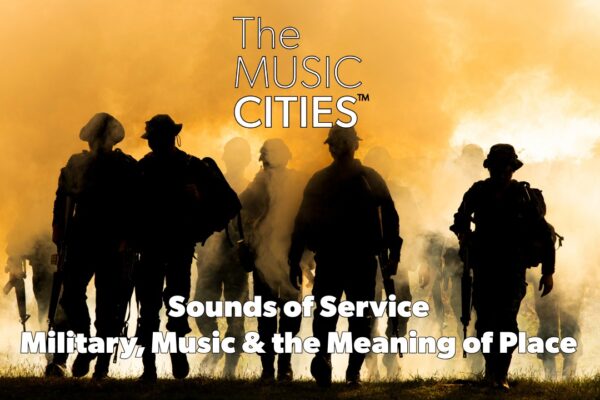
How military service, music, and place shape identity — a personal look at the “soundtrack of service” and what it teaches us about making meaningful places.
In this first episode of the new “Sounds of Service” series, Kevin Crowder shares his military-era soundtrack (from Dvořák to Hank Williams Jr. and Jimmy Buffett) and asks what lessons those songs hold for placemaking.
Join Kevin as he walks through basic training, Monterey, Panama, and Savannah, and explores how songs become tied to places and experiences. This episode starts a recurring series asking: what hidden lessons do these soundtracks hold for building authentic, lasting places people want to be?
Listen & Watch
Show notes
Title: Sounds of Service — Military, Music, and the Meaning of Place (EP05)
Short description:
Kevin Crowder explores the emotional connection between military service, the songs that mark those years, and the places where those memories live. This episode begins a recurring series asking: what can veterans’ soundtracks teach us about placemaking?
Episode summary:
In this first “Sounds of Service” episode Kevin shares personal stories from basic training through assignments in Monterey, Panama, and Savannah. He traces how specific songs and genres — from classical pieces to outlaw country and Jimmy Buffett’s tropical storytelling — became woven into the feeling of particular places. The episode asks whether those connections persist after service, how musical tastes evolve, and whether there are lessons city leaders and placemakers can learn from the way veterans attach music to place.
Key takeaways (3):
- Music often becomes a place-anchor: songs can instantly transport veterans back to the people and locations tied to their service.
- Tastes shift: exposure, peer groups, and place-based experiences change what people listen to during service — and those later evolve after service ends.
- For placemaking: understanding the soundtrack of a community (including veteran populations) can reveal emotional attachments and suggest culturally resonant interventions.
Suggested listener actions / CTAs:
- Listen to the full episode on Spotify or YouTube.
- Get the episode’s “3 Actionable Lessons” on Patreon: Patreon.com/TheMusicCities.
- If you’re a veteran, email podcast@themusiccities.com to share your soundtrack story.
Links & resources mentioned
- Patreon — Music Cities: https://www.patreon.com/TheMusicCities
- Music Cities website / podcast hub: https://themusiccities.band
- BusinessFlare: https://www.businessflare.net
- Full episode on YouTube
- Spotify episode (listen)
- Playlist: “Service Soundtrack” (referenced to include Kevin’s service playlist) — create & paste your playlist link here.
- Films / cultural references: Full Metal Jacket, Apocalypse Now, Platoon (these were referenced in the episode for their soundtracks).
- Albums mentioned: Feeding Frenzy (Jimmy Buffett — live album referenced).
- Songs mentioned (examples from episode): “You Never Even Called Me By My Name”, “London Homesick Blues”, “Grapefruit — Juicy Fruit”, “Migration” (Jimmy Buffett), tracks from Bad Outta Hell (Meat Loaf).
- Other references: Armed Forces Radio / Southern Command Network (story about loudspeaker playlist in Panama).
Transcript
Welcome back everybody to the Music Cities podcast. Today we’re going to explore something a little different. We’re still going to think about how music connects people to place. But today’s episode is going to be called The Sounds of Service or maybe The Soundtrack of Service.
And it’s about sort of that emotional connection we have with music and how that translates into an emotional connection to a place and how over time, you know, different types of situations connect us to places in very different ways. And maybe those connections fade, maybe those connections represent a certain time in our life. And especially if you’ve been in the military.
your different experiences, there’s a soundtrack to those experiences. And it can have a profound effect on how you relate with certain places. And then as we go through this, what I want to think about is are there lessons we can extract from that that are relevant to helping our cities and our neighborhoods and our downtowns? What can we learn from that?
military connection between music and place that we can use when we’re trying to implement good, trying to make great plays, that we can use when we’re trying to make great places and places that people want to be. And maybe it will also help us understand why maybe people don’t want to be in a place. And what role can music play in that, or at least understanding the character of a place?
And I thought about this because there was a post on LinkedIn not too long ago where someone was talking about, you know, asking veterans, what are the songs, what’s the music that you use, that you listen to, to deal with certain situations, to deal with stress, for example. And, you know, I had my answers, but…
Business Flare (03:32.857)
You know, it got me thinking about this and, you know, there’s a lot of podcasts and there’s a lot of conversation about using music as therapy, whether it’s for PTSD, whether it’s for stress, whether it’s just getting through the day, whether it’s for recovery.
And that’s important and there’s a lot of venues for that. That’s not exactly what I see here. This is sticking with the Music Cities theme. How do we look at music and how it connects to a place? But do that through the lens of veterans. And what I envision here is making this something that we come back and visit every few episodes.
and use this as an opportunity to bring other veterans on and hear their stories about music, service, and those places that they served and how they relate to those places in a good or a bad way through music. But to get started, I’ll just talk a little bit about my experience and tell you some of those stories and some of my experience with music as I went through the service. You know, I joined the Army in 1988.
Having spent most of my high school years, in my first two years of college that I had done, playing music, playing in bands, playing in the high school band that was a cover band of mainly 80s hard rock, hair metal. And then joining, when we broke up, joining a top 40 band there in my hometown in Canyon, Texas.
when I was doing my first two years of college. And I had a great experience doing that. We played some gigs. I would hang out at the music store, and I was able to meet some people, and I was able to sit in and learn from some really good musicians there around Amarillo, Texas, and the scene there. But then that got interrupted. Any dreams?
Business Flare (05:30.724)
hopes that I had of maybe making music a career that that pathway got interrupted whenever I joined the army and When I was in the army, I went to basic training in Fort Dix, New Jersey In the summer of 88 and from there. I went to the Defense Language Institute
Business Flare (05:50.56)
I don’t remember there being a soundtrack to basic training.
What I do remember is there’s a music element in war movies. And there’s especially a music element in Vietnam war era war movies or movies about Vietnam. And the directors of those movies went to extra lengths to really incorporate a soundtrack that creates the emotion and the feel of those wars. Whether it was…
Apocalypse Now or Platoon or Full Metal Jacket. It just so happened Full Metal Jacket had just come out and was playing at the Bass Theater at Fort Dix when I was in basic training and we were taken to see it. That’s probably the only place that I really heard music during basic training. You know, we didn’t have Walkmans, you know, with…
count cadence, sing cadence in our formations, it was really, you know, I hadn’t thought about it. was really probably the only two months out of my life that really went without music being a part of it. But from basic training, I moved on to Monterey, California, to the Presidio of Monterey. And
There, your musical taste, it’s not that they change, but you get exposed to maybe some different new music. My interest had always been hard rock and heavy metal. A little bit of country, especially more of the outlaw country like Johnny Cash, Waylon Jennings, and classical.
Business Flare (07:43.993)
I started listening to classical in high school and I think it was just part of the guitar and people like Ingve, Ingve Momstein, and that neoclassical type of guitar got me listening to some of those classical pieces and really got an appreciation of it. But then when you’re around all these people that have different musical tastes, some of them might rub off, but it’s still going to be, I think, what you connect with. And I can remember…
being early in the barracks when I got sent to Monterey and my roommate for the first couple of weeks, I can’t remember what his name is, but I remember that he was of Czech descent. And as we were talking, he was also a big classical music fan.
Well, I had listened to a lot of classical music. wasn’t an expert at it. I wasn’t a big connoisseur. I had what I liked, and I listened to that. And I didn’t really explore a lot of other things. I liked Bach. I liked the very guitar-y things that…
adapted to the guitar very well and Bach is one of those and then and then some themes that are very easy to play or that adapt things like the William Tell Overture Mozart’s 40th Symphony but he introduced me to Dvorak the Czech composer and the piece the New World and I just found the sound of it fascinating and I listened and listened and listened to it over and over and still to this day
When I hear that piece come on, I’m back in that barracks room talking about girls with him while we’re listening to that symphony.
Business Flare (09:28.78)
And I think it’s from there that…
Business Flare (09:58.295)
All good, and you?
Business Flare (10:22.18)
But I think it was that influence that led me to further explore things like Tchaikovsky and eventually Prokofiev and more of that style and that geographic base of classical music. But then we moved into our barracks and it just so happened that I had a roommate, me being from Texas, it just so happened that I got paired up with a gentleman, Brett.
partner in crime the whole time we were out there and sometime in Texas and Me being from Texas and he was from Great Falls, Montana You know, I think we hit it off very well You know very similar backgrounds very similar cultural originations I think came from from very similar family and from very similar family type environments
much more into country music than I was, even though I didn’t have anything. Much more into country music than I was. His preference was Hank Williams Jr. And I had listened to some Hank Jr. You know, I was very much more of the Texas bass like Waylon, who was from not far from where I grew up, but in Willie. But the Hank Jr., once I gave it a chance,
I really got into it and I really wanted to learn everything about it and immerse myself in it because there’s more of an edge there. You hear the word outlaw, but Hank Jr. had that rock and roll element to it. And especially if you saw his live shows and he was voted entertainer of the year numerous times back then there.
there was that rock and roll element to it, hearing him cover things like La Grange by ZZ Top. And what I realized was that I could really appreciate that type of music and it was just something that fit the soundtrack of being in the Army and being at the language school at the time.
Business Flare (12:38.604)
And so again, when I think about Hank Jr., when I hear Hank Jr., it connects me back to those places. And it was very fitting because Hank Jr., know, a lot of his songs, there’s a party element to his stuff. There’s a rock and roll element. There’s a party element. There’s a fun.
you know, go out and have fun. There’s a humorous side to a lot of what he did. And that kind of worked really well at the language school and the Defense Language Institute in Monterey because it was a campus environment and it was almost a collegiate type of experience, just the sort of lifestyle we had with class, obviously still with all of our Army stuff we had to do. But, you know, a barracks building that was mostly full of girls, lots of
Lots lots of going out and having fun when we weren’t meeting our obligations with class and the Army. And so it’s just, there’s a very nostalgic element to Hank Jr. when I hear it still. if I want to feel that, if I want to feel the bonfires on the beach out close to Fort Ord,
with that group of people, there’s specific songs I can go to from Hank Jr. that make that up. Now at the same time, I couldn’t listen to Only Country and only Hank Jr. I had to have my rock and roll. And the other music that takes me back to Monterey is Meat Loaf. And I had this big 84 Caprice Classic and I’d drive it around and, you know, it was one of the few soldiers that had a car. And of course, you know, all of the girls…
wanted to hang out with somebody that had a car but I can remember especially riding around with
Business Flare (14:38.23)
I can remember especially driving around Monterey and between Monterey and Salinas and San Francisco and Meatloaf, Bad Outta Hell was the soundtrack to that. So again, there’s a very nostalgic element when I listen to that of not just the people that I was with when doing that, but specifically to that time and that place and just this emotional connection to
to Northern California whenever I listened to Meat Loaf. But still we’re in training, we’re in school, we’re not out doing what we eventually would be doing, being in the Army. From there, moved to Goodfellow Air Force Base for the Army’s intelligence training at the school there.
you know that was sort of more of the same. was especially more of the Hank Jr. It was sort of the same group of people. We were back in Texas in my element so there was more of the Texas piece. But this is where it became live much more.
You know, this is where you had some new country artists. Country was starting to become more popular. So I can remember there was a bar, a big honky tonk there called the Santa Fe Junction in San Angelo, Texas. And we’d go there a lot because it was probably pretty close to the base. It didn’t take us a lot to get there. And so we’d go there a lot. We’d go there for a happy hour. They would have live music there. Remember, I think it was Shania Twain playing there before she had made it big, Clint Black playing there before he made it big.
You know, but it was around that time, know, Garth Brooks was starting to come up. So that…
Business Flare (16:19.746)
that generation of country was going and that’s what, and it really was picking up during that time that we were in San Angelo. And so again, it was very fitting, but there was a lot of that type of live country music going on. And besides the Santa Fe Junction, there were a couple of other places where we could go, especially at happy hour or even late at night and experience that and get that live music vibe to kind of take the edge off after we got out
our intelligence training classes during the week.
Business Flare (16:56.622)
From there came Panama.
And remember…
Business Flare (17:05.73)
You know, in Panama, I have a guitar at the house that I took with me. I hadn’t really, you know, my time in Monterey, the one thing that was missing, and even my time, I would say, in San Angelo, I didn’t have my guitar with me. You know, I still had my guitars at my parents’ house in Canyon, Texas, which was about a five-hour drive from San Angelo, and I’d drive up there now and then.
And maybe tinker around a little bit, but I hadn’t really played. And I remember, actually I was on a layover here in Miami on my way to Panama. And I had a long layover and I got a taxi and I went to a pawn shop in Hialeah and I bought this just really Frankenstein guitar. I it’s got a banana neck, it’s got a Fender body, it had aftermarket pickups in it.
But I had that in the small amp. Actually, it’s a small amp that’s over here the time that I was down there. And so it gave us something that I could just come out and play at the gazebo at the boyo in front of the barracks when we were off duty. But one thing, I don’t know how I ended up with it. When I got to Panama, my roommate Jack was also a Texan. He was the only other Texan in the unit. And we happened to end up in the same.
the same barracks room and we listened to the same music, lots of Hank Williams Jr. He was texting to lots of Jerry Jeff Walker, David Allen Co. and then getting more into some of the rock and roll as well. But I remember going to the Post Exchange and making on, I think in Chorosal and making it beeline all the way to the back of the PX where the cassette tapes were.
and digging through and looking for Hank Jr. especially. music by anybody that we were looking for because Armed Forces Radio was not playing what we wanted to listen to. Side note, maybe one thing we’ll talk about in one of the follow-up episodes here is the incident where Manuel Noriega fled into the Vatican embassy in Panama City and
Business Flare (19:21.794)
the army surrounded the Vatican embassy with loudspeakers and the Southern Command Network radio started taking requests of music to blast at the embassy. So one of these other episodes we’ll dig into that. have the playlist throughout those days of what they blasted. Anyway, Panamanian radio was not playing what we wanted to hear.
You know, so it was always digging for these tapes, you know, at the PX so that we’d have something familiar and something that connected us to it. because music is something that got us through. I can remember Sergeant Bancroft down the hall from us, you know, always carrying, putting his big multi-piece stereo and taking it out for the two or three days we’d be hanging out at the bohio between, you know, when we got off shift until our next shift started. So music was kind of always there. It was not a place for live music.
It was an NCO club and they’d have a country night, I can remember. But at some point when I was in Panama, I ended up with a CD and I don’t know how I got it. I don’t remember buying it. I remember that it sat in my collection for a long time and I gave it maybe a couple of tries, listens here and there.
But I just sat there and finally I let it play. I thought, what is this? This is kind of cool. And I was late coming to this genre to Hillman. We did an episode on Hillman, episode three. But it was Feeding Frenzy, a live album by Jimmy Buffett. They’d come out maybe in, sometime, maybe 89.
And so I started listening to it more and it was this cool mix and it was a really good fit for being in Panama because there was this tropical mix to it but it was relatable to someone that was both a fan of country music and a fan of different types of rock.
Business Flare (21:26.06)
And what was cool about it was it was really simple music. know, I could grab that guitar there and play still many of those different songs because they weren’t hard. Jimmy Buffett never made himself out to be a virtuoso guitarist.
And they were relatable songs, were stories, and it was almost an escapism. And especially once you’re out somewhere and you’re in Panama, stationed down there, and you’re dealing with what you have to deal with on the being in the service side.
Jimmy Buffett sang about this great place that was very relatable, that was very understandable, that was very desirable, a place that you really wanted to be. And so you start imagining and you start getting those sorts of stories in your head. And again, he created that fictional place that you wanted to be, but it helps you deal with the real place that you’re in.
And so I took that, and then from Panama I went to Hunter Army Airfield in Savannah.
I brought another of my guitars and I brought one of my acoustic guitars from Texas and I had all of those there in Savannah.
Business Flare (22:50.136)
I remember one day we were on River Street and there was this restaurant, this bar called Port Royale. And we went in there, we’re sitting in there. I can remember this real tall, think it was Brit, bartender. And there was a guy with an acoustic guitar and a drum machine. And he was just, you know, he was playing some stuff. And I recognized some of it. And he played some Hank Jr. And he was playing some Jimmy Buffett.
But he played this other song. I remember he played the song London Homesick Blues. And I remember I had a recording of Jerry Jeff Walker playing that and I had a of David Allen Coe playing that. And then I asked him if he knew the song You Never Even Called Me By My Name. And he said that he knew the lyrics but had never learned the chords.
And I told him it’s easy, it’s this, this, it’s like D, G, and C with an A minor thrown in. And he said, you play it. said, yeah. He said, well, play my guitar and I’ll sing it. You play it. So we did that. So I played his guitar. I sang it. He asked me if I knew Grapefruit Juicy Fruit, Jimmy Buffet. And I did. And so we did that one.
And then he told me, said, hey, next time you come, bring your guitar down and you can sit on it for a few songs. So I’m like, OK. It’s cool. And so it started this almost every weekend, if we weren’t TDY somewhere while we were in Savannah stationed at Hunter, Friday night, Saturday night, sometimes even on a Thursday night, grab the guitar, go down there, sit in with his name was Jimmy Hurricane.
and play mostly a bunch of Jimmy Buffett songs. I learned so many more Jimmy Buffett songs from just sitting in and hanging out there with him. But we’d play some Hank Jr. We’d play some other things. And it was just a really, and I remember Jan, the tall Brit bartender, he’d come and play bass sometimes. But again, it became, and it became in that time,
Business Flare (24:56.568)
You know, sort of similar like when we were at the gazebo as a platoon in Panama, but it would give us this opportunity for the camaraderie side of our unit. Go all out to River Street together. Go to Port Royale. You know, everyone kind of have fun. It’s kind of fun, you know, I guess with me up there and one of your buddies, one of your comrades and platoon members, you know, getting to be up there and perform.
these good times that again maybe there’s an escapism piece to it. It’s not that being a hunter was hard, you know, and none of these experiences that I connect music to my service with or anything like what the G-WAP generation has gone through.
But nevertheless, we all have our own individual experiences when we’re in the service and there’s a soundtrack to those experiences. mean, just like Businessflare has a soundtrack, my experience in the Army has a soundtrack. And in the description, I’m going to post the link to the playlist on Spotify and YouTube of my service soundtrack. And I’d encourage you, know, create your own. Tell us what your service soundtrack is. But I took all of that and then,
You know, I think the thing though is once you create these connections and these emotional connections to these places, and I’m not getting into, you know, war stories and deep into the individual things that were happening in these places that I’m talking more about music and just where I was, but you know, there’s significant events that took place. And when you’re doing, you know,
And the music connects you to those places. And I think that one of the things that happens there, is once you’re not in that place anymore, maybe it changes your relationship with that music. Because I don’t listen to a lot of that music anymore. My musical tastes always evolved. And I’m a hard rock, heavy metal guy.
Business Flare (27:10.346)
at heart, you know it’s interesting I didn’t listen to as much of the hard rock and the heavy metal when I was in the service. I think some of that may have had to do with the people that were around me and trying to trying to find common ground and not just make you know force people to listen to stuff maybe they didn’t like and so I think I think I think there’s an element of that. But, you know I moved to Florida two years after I got out.
And I love Key West and I was drawn to Florida and a song like, you know, Jimmy Buffett’s Migration.
is one of the songs that made me want to be here because when I got out of the Army and I went back to Texas to finish school, I was still doing a lot of Buffett. I was still playing a lot of Jimmy Buffett on my acoustic, learning more of his songs. And there was an element of that fantasy land, of that placemaking desire that we talked about in episode three that was part of why I moved to Florida. But it wasn’t the main reason. But there was consistency there. But then once I decided to stay here,
You know, that was a big part of it, especially in the first year when I was spending a lot of time practically living in Key West for part of that time. But then you realize that Florida and even Key West is not the place in the songs. It’s the place that inspired the songs. But when you get there, it’s not. You don’t find Marta Readable when you actually get to Key West. You find the store named Marta Readable.
But I find that over time, I don’t listen to Jimmy Buffett very often anymore. I don’t listen to Hank Williams Jr. very often anymore.
Business Flare (28:52.792)
When I listen to Glasgow, don’t listen to his fore-eye that much anymore. Meatloaf, now and then, but not like I did before. And so I think, do we, and this is something I’d be interested in when we start talking with other vets, is do we leave something behind with this music? Do we give up our relationship with this music? do we lose our connection with this music?
when we lose our connection to that place and to these places that we’re so emotionally connected to. There’s lots of things that happen, both in training environments and in live mission environments, whether it was in Monterey or San Angelo or in Panama or in some places where we did temporary duty and TDY or in Savannah.
know, there are emotional connections that come out of all those places. And there are emotional connections to the music and to the music we had when we were there. And when we’re not there anymore,
Business Flare (30:02.444)
what happens to that connection to the music that defined those times or defined those places for us. And yeah, I find that I don’t so much have that. What I do have still is I have more connection to the music I listened to in high school. When I was first trying to become a musician, the things that were really the biggest influences on me as a musician, rather than the things that were an influence on me as a soldier.
Business Flare (30:33.348)
And so I don’t know what the lessons are yet for what makes this important for our cities today and our placemaking today. I didn’t view this as an episode that was going to answer that or solve it. But I see it as an episode that starts to ask the questions. And so as we take this forward, we’re going to start reaching out and talking to veterans.
and understanding how they connect to place through music, both during their service and today. Good experiences or bad experiences. I think it would be especially interesting to talk to some veterans who work in the field of economic development and get their thoughts on how do we then take these lessons. What’s hidden in there, the whole purpose of this podcast is to find
find your city’s story and find what’s hidden in music that helps us make better places. What can we learn from military service, from theaters of combat, from war, from barracks life, from training environments? What can we take from the music that got us through that and bring that into our place making?
Especially maybe as we deal with trying to improve places that are not in a good place right now. And how do we bring them out of that and bring them forward? Anyway, podcast at themusiccities.com.
podcast at themusiccities.com if you’re a veteran and you want to talk about your experiences with music and how music relates to place let us know and we’d love to have have a conversation with you and see see how you fit in to coming on and chatting about it until next time thanks for watching let’s do it
All artists / composers / acts mentioned (as written in transcript)
(kept exactly as they appear in the transcript; duplicates removed; sorted alphabetically)
- Bach
- Benny / (no explicit artist — omitted)
- Clint Black
- David Allen Coe (transcript: “David Allen Coe” / “David Allan Coe” appears)
- Dvořák
- Garth Brooks
- Hank Williams Jr.
- Ingve (Ingve Momstein in transcript)
- Jerry Jeff Walker
- Jimmy Buffett
- La Grange (song referenced — by ZZ Top)
- Meat Loaf
- Mozart (Mozart’s 40th Symphony mentioned)
- Prokofiev
- Shania Twain
- Tchaikovsky
- Waylon Jennings
- ZZ Top
- (Hillman — referenced as “Hillman” in episode three — included as “Hillman”)